
In the weeks leading to my mum closing her hardware store for the final time, Rukundo and I smoked weed by the parking lot on Rwahama every night. We would close the shops, convene at the back of the queue of hardware stores lining up from the police station to the MTN centre, then grind the weed. Rukundo would fill the paper with whatever strain his older brother had stashed under his mattress, and I would roll the joint.
This was after high school, after my mum got sick and needed someone to keep the business running while she reported to the doctor’s office every morning. She wanted me to learn the ropes, to know every source of cash flow, to keep me from wandering and losing myself in the abyss of being lazy.
At first, it was wholesome. Like money in your pockets can be. I’d sit behind the counter all day, glued to my phone. It would get very hot at some point, lonely too. You couldn’t sit inside the stores lest you wanted to melt. Kigali streets would be crowded, from street clerks in khaki boiler suits covered in paint to stands of tiles, brooms, and locks displayed in every shop entryway. The upside was that the traffic of white-collar workers always led every wanderer to us.
Men in suits would park their cars in front of our doorway, joined by their painters, or plumbers, or whoever they’d brought along from the construction crew. The money holders would negotiate the prices, Their employees would try to swindle their bosses’ fortunes in their favor.
Day would become night, and the night would become dry. The same traffic that sprung customers to us took them away. We would go home then.
Then Rukundo started working three doors down to my right. He was helping his aunt while she stayed at home, drank wine, and watched movies. The goods sold themselves anyway.
After a while Rukundo started earning extra cash by charging customers a little more on every product. He was good with people. Better at hustling. He would often hustle my mum too.
It started the evening I went out with him to celebrate. We played pool at the bar behind the stores. We danced with a couple of women older than us, and drank more than we could handle.
I asked Rukundo to teach me how to make extra cash too.
He said, “Stick with me and you’ll have paper in no time.”
Later that night, Rukundo bought a rolled joint from a couple of lingerie-wearing girls behind the club. He claimed it was alright if I didn’t want anything to do with it. But he’d also told me to stick with him.
The first puff felt like nothing. A few more hits in, and my vision blurred. I stuck my head under a faucet and marched back home. I felt like I was walking on air.
The euphoria became a regular pursuit for me, and sure enough, I began spending more time with Rukundo. I would get a glimpse of him at work, how he finessed the men, how he complimented the women. He smelled like a canoe of roses. He grew his beard; it was all part of the job.
“You ever think about not working for anyone, being your own boss?” asked Rukundo, after we finished lunch one day and sipped mango juices. I nodded.
“Who doesn’t want that?” I said.
“I can’t wait to have my own money, and like, my own business,” Rukundo said calmly. He wanted that life. He wanted to be the master of his own fate.
And I guess that was the first lesson he taught me. I had to have a dream. I had to remember it every day.
Mum always planned for the store to last forever. To feed us even when she wasn’t around. But business was struggling. Every day or so, a new hardware store popped up across the street and slowly shrank our profits. That became another motivation. We were out for blood, only you couldn’t be straightforward with it.
I cleaned the place up every morning. I mopped the floor. Dusted the doorknobs, the pliers and pipes. I wiped the Milano toilets and the bathroom mirrors, and dirt lived in my nails. I stood in the doorway and made jokes with passersby. I became annoying, loud, in people’s faces. I conned, I complimented, I made promises I couldn’t keep. But I got money.
I would say things like, “Anything you want, we have here. And if we don’t have it here, it’s definitely in our storeroom.” And they gobbled up every sentence. The plan was this: you added extra money on things you’d get from other stores, pay back the original cost and have a little left for yourself.
The paints that had lasted over two years without anyone touching them suddenly disappeared. The fuses and the varnishes, the hinges and the wrenches; all sold themselves. Then, around 8 p.m., we counted how much we’d earned, filled the accounting book and went behind the shops to smoke.
Cash flowed through my fingers like water. First came the weed. Second was the new pair of Jordans. Then the weekend getaway in Kibuye. Mum asked where I was getting the money. I told her.
“I overcharged some things at the store,” I said.
I was ready for pride shining on her face. I was waiting for “You have an eye for the business,” but instead she slapped me. Then Dad scolded me, told me I was stupid.
“How do you suppose the customers will return if you overcharge them?” asked Mum, but she didn’t let me answer.
“I’m sorry,” I said. But I wasn’t.
Days later, Mum began to spend more time at the shop. She would sit behind the counter, and I’d be forced to stand almost all day in the doorway. Rukundo would come by, charm my mum like she was any other customer. Then we would slip away for a second, round back near the public toilets, and inhale the largest puffs.
“Things are looking tough for you, man,” remarked Rukundo.
“It’s only for a few days,” I assured him.
Then he passed the joint. Then I took a deep drag, held it like a drowning man’s last breath, released it, then leaned on the wall for support.
“This is premium shit,” I said.
Rukundo smiled. “I have a new plug,” he said. “I’ll introduce you,”
Later, I positioned myself inside the store, cleared a chair beside the displayed sinks where I could see a customer from a mile away and I could watch mum glued to her phone, praying.
She would stand up once a client entered the store, with a big smile. She would draw in closer, truly listen, truly understand what was needed. Then she would give them some advice. Sometimes the advice would go against buying anything from us. Sometimes it would just be a person talking to another person.
And I would make the receipt, and lift the cans of paints, or toilet seats, or carry cables and wires into their cars. And by dusk, we would close up, buy the bread for the night and go home. The Indians beside us would leave next, often heading into bars. The women across from the gas station would stay a tad late to gossip. The street clerks hopped on their bicycles and rode through Kimironko like a gang. The chain of stores would go lights-off one by one as the night darkened and streetlights tried to fill in for the sun. Rukundo would be the last to close shop.
And Mum would ask if I was okay. If I was learning anything. If I was happy. And the answer would always, always be no. But of course, you can’t say that.
A week later, I hammered myself with the last half-gramme of weed I had left, but it didn’t taste the same. It wasn’t premium. My tongue had lost its colour. I began to act out, to withdraw. The nights became my day. Everything felt intangible. Sugar was spicy. Meals were bland. I tried to exercise. I watched movies to take my mind off the craving. But it was relentless in its pursuit. Ran me dry. Kicked me in the nuts.
I stopped wanting to work which was probably what my parents wanted as well. But they sent me to the store to save face.
“Get your ass there,” they said.
Rukundo saw me through the window as I sat shivering in my chair.
“You need to stop this,” he said as he snuck me a joint in the store. “You need to get off this thing. You’re addicted.”
I came alive again. A little smoke can show you the light. I felt over the moon with every inhale.
“You haven’t stopped,” I muttered. “Why should I?”
But Rukundo simply sat next to me. He stared with empathy at the monster he’d helped create. It wasn’t his fault, mine either. But here we were.
“I’m getting my own place in Kicukiro. Come visit sometime,” he said. I grinned, then fist-bumped him.
“You’re living the dream,” I said.
He left afterwards. And I guess that’s the other lesson I learnt from Rukundo. You had to protect your dreams no matter what. You couldn’t let fun ruin them. You couldn’t let a junkie drag you down.
I sprayed the shop with a mixture of baking soda and essential oil I’d learnt from a YouTube video. It smelled like a brand-new shipping container. But my mum was nifty with her nose, she could smell anything funny even hours later. Eventually, the spray couldn’t mask the weed, and she found out her son smelled like death.
At first, she threw things at me. Duct tape and cans of spray paint. She asked if I was trying to give her a heart attack. She then took to crying and pleading.
Then Dad took over, kicked the shit out of me. “Why are you like this?” he kept asking. “Why?”
But I had no words. My brain was halfway in the clouds. So Dad threw me in the streets and told me to leave, to pack my shit and never come back.
Everyone on that corner saw me lying on the ground. The Indians, the men in suits, the gossips at the gas station, Rukundo.
I left. I never looked back.
If you ask me how I landed here, I couldn’t tell you. I had no clue. I didn’t even cry. It all felt like a dream, until it wasn’t. The aunties and uncles refused to take me in me on account of family. As if the word had changed its meaning.
I found a job at one of the high-end restaurants in Nyarutarama. I stopped crashing at my friends’ places. I rented a studio space in Kacyiru and gained a kilo or two on my body.
When I bumped into Rukundo years later, he seemed genuinely happy to see me.
“I have a wife now,” he told me. “Couldn’t find you anywhere to invite you to the wedding.”
I told him it was okay. That I was proud of him. He wasn’t his own boss yet, but in a way, could you ever really be?
“You’re living the dream,” I said.
And this time he hugged me.
“Your mum misses you, you know,” he said. “Leave her a text. Tell her you’re okay.”
Later, I rolled up a joint and settled on my bed, gazing at the cracked ceiling overhead. I wondered how anyone ever escapes from this. I used to believe that you could.
About the Contributor
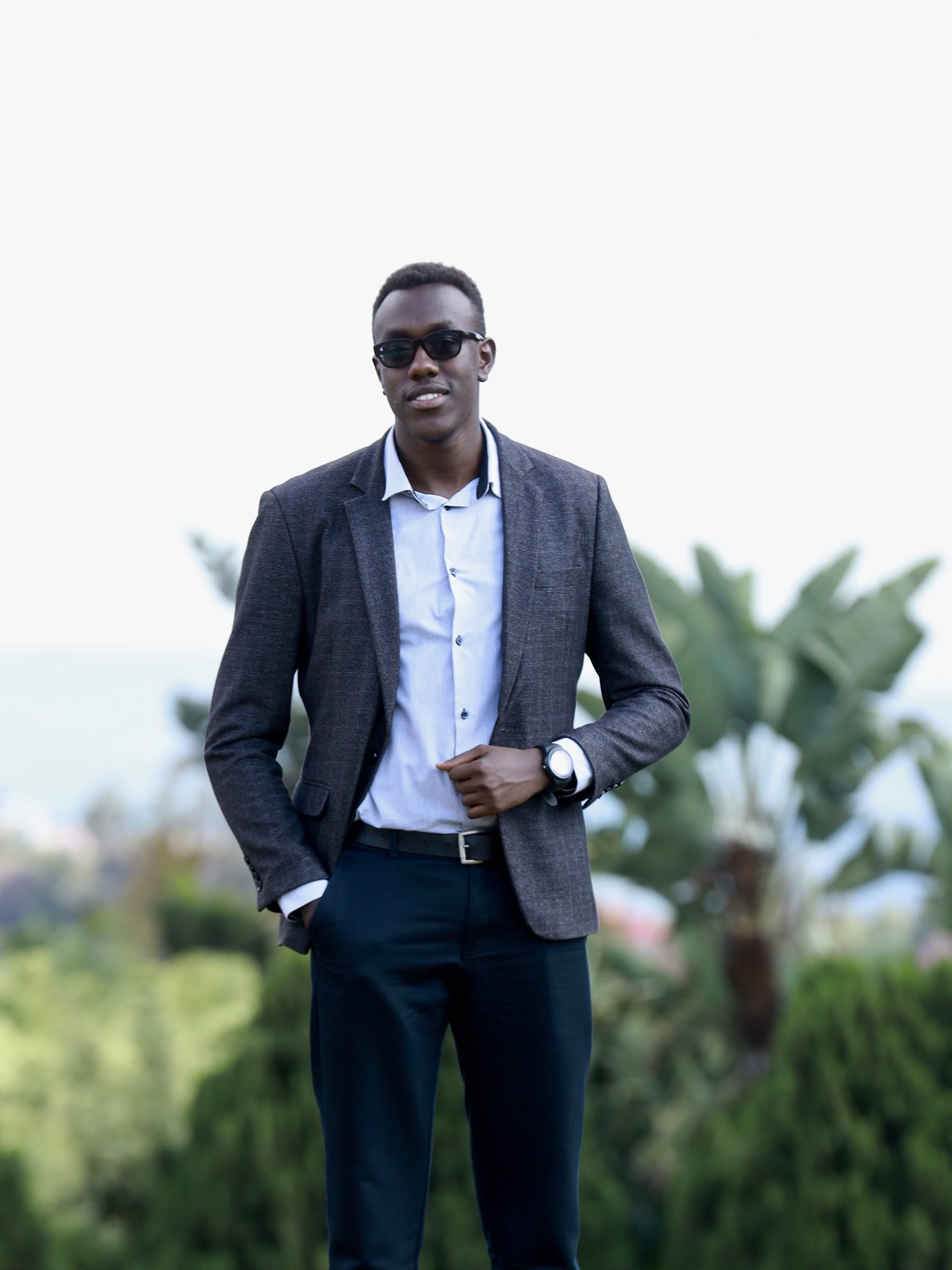
Patrick Shyaka is the Rwandan author of the story collection “Where Women Meet Boys”. His works featured in a number of reputable literary journals, including Brittle Paper, Isele Magazine, Lolwe, Lounloun, African Writer Magazine, The Kalahari Review and elsewhere; presents a luminous, metaphoric fetish for conclusions and a yearning to describe the world with the elusive beauty it holds and the realism of the human shortcomings. Safe to say, the writing is not boring.